
Dolly Parton, Gloria Steinem, and the Child-Free Legacy Myth
Both obituaries carried the same clause. Somewhere under the accomplishments, in a sentence built like a footnote and landing like a verdict: she had no children. Dolly Parton and Gloria Steinem died within weeks of each other, and the child-free legacy myth was back in circulation before either woman was buried. The myth says that a life without children is a life that ends when you do. Two of the most consequential American women of the last century just proved otherwise, and the coverage still couldn't help itself.
What the two of them actually left behind
Legacy is the part of your work that keeps running without you. By that definition, here is the accounting.
Parton founded the Imagination Library in 1995, mailing free books every month to enrolled children from birth to age five, starting in Sevier County, Tennessee and expanding to multiple countries. More than 300 million books have been provided to over 3 million children worldwide. She built Dollywood, which made her one of the largest employers in her home county. She gave a million dollars to Vanderbilt University Medical Center in 2020, money that went to the research behind the Moderna COVID-19 vaccine.
Steinem co-founded Ms. magazine in 1972, when the suggestion that women's journalism could sustain a national title was still treated as fanciful. She co-founded the Ms. Foundation for Women. She co-founded the Women's Media Center in 2005 with Jane Fonda and Robin Morgan. She received the Presidential Medal of Freedom in 2013. Millions of women have been paid, published, protected, or believed because of the institutions she left standing.
Neither of them left behind a lineage. Both of them left behind infrastructure.
"No children of her own" is a convention, not a fact worth reporting
Watch what happens when the clause is applied evenly. It isn't. Men die every week with vast bodies of work and no children, and their obituaries are devoted to the work. For women, the absence is treated as biography: something the reader needs, filed alongside the birthplace and the cause of death.
The kicker? The people who repeat this line rarely mean it as a slight. They mean it as a small sadness on the deceased woman's behalf. That is arguably worse. It assumes she spent her life missing something, and it uses her death as the moment to say so on her behalf, when she is no longer available to correct the record.
Parton spoke often about believing her life took the shape it was supposed to take, and about the children who receive her books: “I didn't have children because I believed that God didn't mean for me to have kids so everybody's kids could be mine, so I could do things like Imagination Library.” Steinem spent decades saying plainly that women do not all have to live the same way: “It’s important that some of us not have children, to show that we have a choice.”
They both answered the question while they were alive. The obituaries asked it again anyway.
The same math runs at work, and it costs you money
This is not only a matter of how we get eulogized. It is how child-free women get assessed while we're still in the building.
The assumption that our lives are lighter is the assumption that our contributions are lighter. It shows up when the long-horizon project goes to someone else because she has "more of a stake in the future." It shows up in succession planning, where the person who mentors half the department gets described as having no one depending on her. It shows up in the quiet expectation that we'll cover the holiday shift, because our December has nothing in it that counts.
The women who built the Imagination Library and Ms. magazine were not filling time. They were doing the work, and then the work outlived them, which is the only test of legacy anyone has ever actually applied to a man.
If someone tells you your life won't leave a mark, ask them what they think a mark is. Then tell me what they say, because I have yet to hear an answer that survives the question.
(Cover image generated by AI)
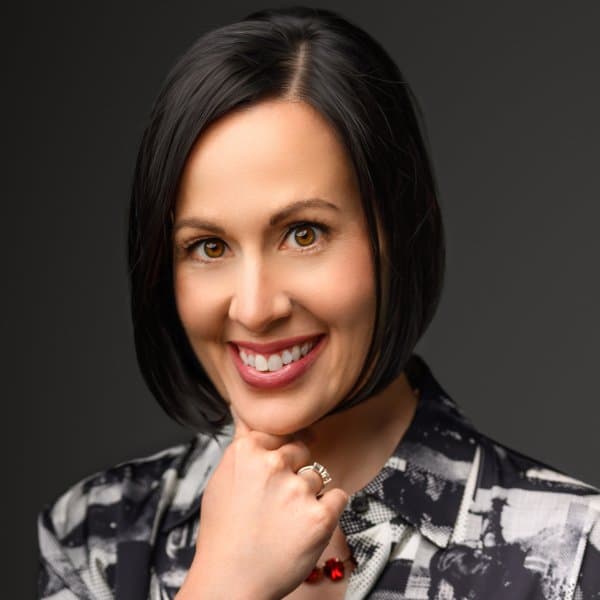
Alysia Christiaen
Creator of CFW² and a child-free woman
I'm a child-free woman in her 40s in London, Ontario, who realized that there needed to be a space for professional women without children to share their experiences. So I created CFW².
Enjoyed this article? Join our community.
Get monthly updates with stories, resources, and community highlights.
Subscribe to Newsletter